
PEER REVIEW PROCESS
Editorial Procedures and Peer Review Process
Initial Manuscript Screening
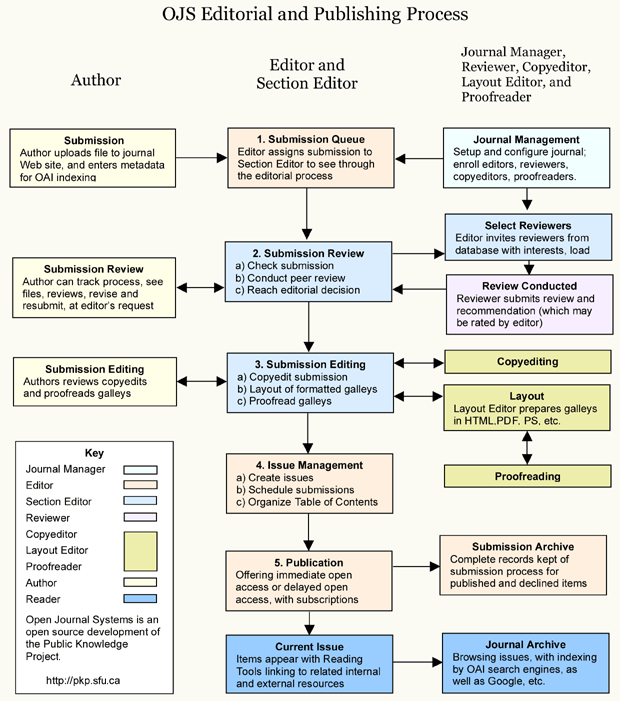
All manuscripts submitted to Studia Quranika: Jurnal Studi Quran undergo an initial screening conducted by the Managing Editor. At this stage, manuscripts are examined to ensure compliance with the author guidelines, publication ethics, and the journal’s academic standards. Manuscripts that do not conform to the journal’s ethical policies or writing requirements will be rejected before entering the peer review process. If a manuscript is not technically prepared in accordance with the guidelines, it will be returned to the author for revision and resubmission. The Managing Editor will then coordinate with the Editor-in-Chief or Editors to assess whether the manuscript fits the journal’s focus and scope and meets basic scholarly criteria. At this stage, no evaluation of the potential impact or significance of the findings is conducted. Any rejection at the initial screening stage must be approved by the Editor-in-Chief.
Peer Review Process
Manuscripts that pass the initial screening will be assigned by the Editor to at least two independent reviewers with expertise relevant to the subject area of the manuscript. Studia Quranika: Jurnal studi Quran applies a double-blind peer review system, in which the identities of the authors are not disclosed to the reviewers.
For regular submissions, reviewers are appointed based on their academic expertise, including recommendations from the Editor-in-Chief. Reviewers may be drawn from the Editorial Board or external peer reviewers. All reviewers must be free from conflicts of interest.
Reviewers are considered to have a conflict of interest if they have previously co-authored publications with the authors, are currently or have previously collaborated with the authors’ affiliated institutions, or have been involved in an academic supervisory relationship with the authors. Conflicts of interest may also arise if reviewers receive personal or professional benefits from the review process, have close personal relationships with the authors, or hold direct or indirect financial interests in the manuscript under review. Collaboration in joint academic projects or participation in academic committees is not considered a conflict of interest.
The peer review process normally takes a maximum of six (6) weeks.
Editorial Decision and Revision
All articles published in Studia Quranika: Jurnal Studi Quran must undergo peer review and receive at least two review reports. The Editor will communicate the review results and revision requirements to the authors. Editorial decisions may include the following:
- Accept/Accept Submission
The manuscript meets all journal requirements and proceeds to the final editing stage. - Minor Revision/Revisions Requires
The manuscript is accepted subject to minor revisions based on the reviewers’ comments. Authors are given one week to complete the revisions. - Major Revision/Resubmit for Review
Acceptance of the manuscript depends on the quality of the revisions. Authors are required to provide point-by-point responses to the reviewers’ comments. In general, only one round of major revision is permitted. The revised manuscript must be resubmitted within a maximum of three weeks and will be re-evaluated by the reviewers. - Reject/Decline Submission
The manuscript is considered to have fundamental weaknesses or does not make a significant scholarly contribution and is therefore not recommended for publication. In such cases, resubmission is not permitted.
If reviewers determine that the manuscript’s conclusions require substantial additional data or analysis, the manuscript will be rejected, and the authors will be encouraged to resubmit after making major improvements.
All reviewer comments must be addressed clearly and systematically. Where authors disagree with a reviewer, they must provide a well-reasoned academic justification.
Author Appeals
Authors may appeal a rejection decision by submitting a written request to the Managing Editor. The appeal must include a detailed explanation and point-by-point responses to the reviewers’ or Editors’ comments. The Managing Editor will forward the appeal materials to the Editor-in-Chief or a member of the Editorial Board for further consideration. Decisions made at the appeal stage are final and cannot be reversed.
Production and Publication
Manuscripts that are accepted for publication will undergo professional copyediting, language editing, final author proofreading, final corrections, adjustment to the journal article template, and online publication on the Studia Quranika: Jurnal Studi Quran website.
Post-Publication Corrections
The corresponding author may request corrections to a published article in the case of significant errors. Such requests must be submitted no later than one week after online publication and will be handled in accordance with the journal’s correction policy.